19 Jan 2015
Ok, fair enough, it is time to get abroad for our interviews! We had the pleasure to talk with [Thomas James]((http://www.thomasjamesillustration.com), a great California-based illustrator with clients such as The New York Times, WIRED Magazine, Pentagram, Wall Street Journal or Billboard Magazine. Thomas also is Editor and Creative Director at successful websites like Illustration Age and Illustration Friday.
How did you get into illustration? Where did the road to become a illustrator began for you?
Like many illustrators, I grew up with a passion for drawing, painting, and many other forms of art. I chose to pursue illustration because I liked the idea of working with magazines and newspapers to create art for public consumption. I went to art school for a couple of years but was unhappy with the education I was receiving, and plus I was already starting to get work as an illustrator, so I decided to quit and just dive in.

Where do you find inspiration for your work, and how do you melt your sources of inspiration to create a unique, original style like yours?
I'm into all kinds of art, whether it's illustration, music, building things, or whatever. I thrive on anything creative, and since I tend to bring creativity to all aspects of my life, they all feed into each other in one way or another. I also look at a lot of art as the Creative Director of Illustration Age and Illustration Friday, so everything just kind of rolls around in my brain and becomes a nice hearty stew.
We see a lot of startups and projects appearing lately around the world of illustration. Do you think this will continue to grow, or is it some kind of "heat of the moment"?
The internet opens so many doors for artists to create their own projects and share it with the world in a way that was never possible before, or at least very difficult and expensive. I do indeed think this will continue to grow now that it has become accessible to artists all over the world.
What good (and bad) things do you feel the Internet and the new technologies have brought to the illustrator profession?
Adding to my previous thoughts about accessibility, the internet also brings a seemingly infinite community of support for any artist looking for answers, assistance, or simply inspiration. One drawback of the internet is that some companies tend to take advantage of artists by stealing and selling their work without any credit or compensation for the artists. There's just so much art out there for the taking that it's hard to protect yourself from it.

And last, but not least: any advice for aspiring illustrators just starting up their careers?
Two main pieces of advice:
1) Do as much research as you can about ALL aspects of being an illustrator. Read books, listen to interviews, ask questions, read blogs, etc. Learn everything you can about not only the skills and techniques of art, but also the business side of things.
2) Persistence and endurance is really key. Sometimes it can take a few years or more to really get your career going on its own. You have to accept that fact from the start and be prepared to work as hard as you can and as often as you can for little or no reward until you start to notice things starting to happen.
Thanks a lot, Thomas!
05 Jan 2015
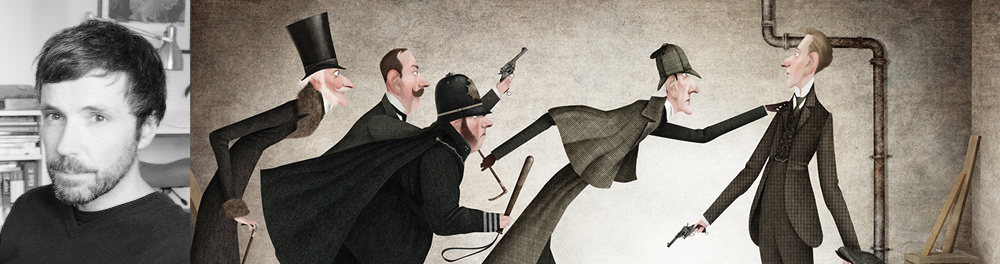
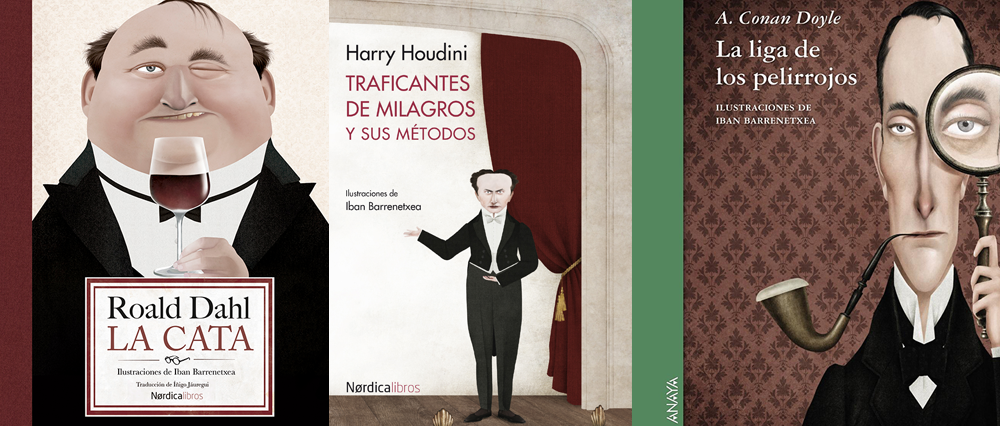
In the first interview of this year 2015, we had the pleasure to talk with Iban Barrenetxea, extremely talented illustrator from Basque Country, who after more than ten years devoted to graphic design changed his focus to books illustration, achieving great success. Iban is also a PRO user of Drawfolio and you can view and enjoy his work at www.ibanbarrenetxea.com.
You worked a lot on graphic design before focusing on illustration, and you are also the author of the texts of some of the books you illustrated. How was this journey, and what made you start it?
Books have always been very important to me, but I suppose I saw graphic design as a more realistic way to build a professional career. I always thought it as something "temporary", but it turned out to be more than 10 years! I took my time, but changing to illustrating books was a very natural step. I shared some work on my blog from time to time and began to receive proposals from editors. I gave the final step four or five years ago and.. here I am!
How is working in the publishing sector? What is that you like the most or the worst about it?
It is a highly complex world, but I think I'm slowly getting the grasp of it. I love finding people who are passionate about publishing books and dare to do something different. Working with the calendar always in sight, that I like less: deadlines and terms are crazy nowadays. But without deadlines, I think I still would be polishing my first book.
What qualities does a client and project need to have for you to feel comfortable and motivated?
I never see editors and publishers as "clients", but as people with whom I work with a common goal: to make the best book possible. The editors and publishers I like the most are the ones who are passionate and get involved in the project as much as I do.
What good (and bad) things do you feel the Internet and the new technologies have brought to the illustrator profession?
The positive: the communication opportunities and spred of our own work. The negative: with a daily overload of information, we are consuming everything faster and in a more superficial way.
And last, but not least: any advice for aspiring illustrators just starting up their careers?
Work a lot, read a lot and always keep learning.
Thanks a lot Iban!
31 Dec 2014
2014 was a busy year for Drawfolio, and we want to share with you some figures that tell what happened to us this year. During 2014, we had:
| 366.932 | pages viewed |
| 78.146 | visits |
| 17.452 | images uploaded |
| 1.786 | galleries |
| 1.621 | registered users |
| 858 | twitter followers |
| 537 | facebook followers |
| 75 | PRO users |
| 60 | posts in our blog |
| 28 | newsletters |
| 17 | media appearances |
| 8 | pitches and talks |
We could have not achieved all of this without your support, so we want to wish you a Happy New Year and give you the most important figure of all of them:
1 MILLION THANKS!
29 Dec 2014
Let's carry on with our interview series! We really want to interview illustrators from other places in the world, but our home city Valencia has got so much talent that we are still sticking there for our interviews.
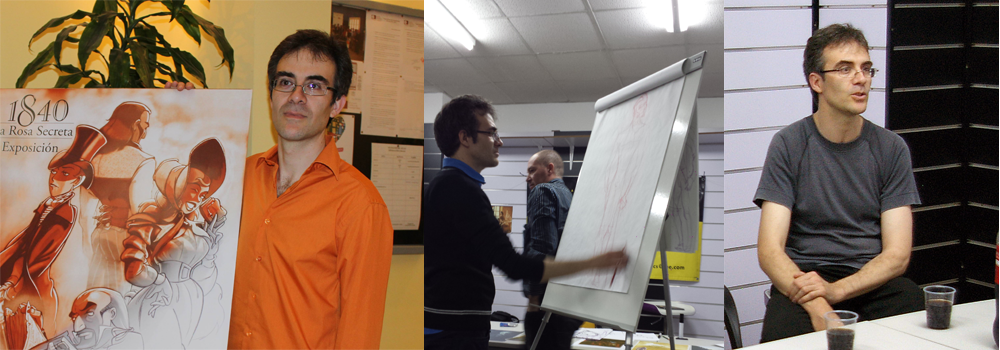
This time we talked with illustrator and comic author David Belmonte. Among other things, David has published the comic book [1840: La Rosa Secreta](http://misteriolondres.blogspot.com.es/] with writer Carmen Pardo under Glenat - Editores de Tebeos. David is also a PRO user of Drawfolio, and you can visit his portfolio website right here.
How did you get into the world of illustration comic books?
Like most of people in our profession, I had an early inclination for watching and creating images. Step by step, I learnt the techniques and work process on my own but also on schools, academies or faculties. I discovered the different professional fields there and slowly began to choose where to focus.
You work in client projects and national-published personal projects alike. Which are the pros and cons of dealing with both dedications?
When a company, agency, or publisher is interested in one of your personal projects and supports it, getting involved in its production, that project has already become "work". Until then, that project is in a seed stage where is a child of yours of sorts, and that "love" side makes you to put a lot more hours into it than it would be reasonable.
Aside from that, both personal projects and client work are similar in terms of the work process, technique domain and achieving goals.
Do you think it's important for an artist to find a well-defined and unique style, or it's better to be versatile? Is it possible to find an equilibrium between these two?
Both options can work, the real important thing is achieving your goals and enjoy of what you are drawing and the way you are drawing it. If your goal is to become a professional you can choose both ways. If you find yourself in the need for a unique style, you'll have to work hard to find that graphic language with which you tune in, feel comfortable and find a market niche (I'm thinking of authors like Paco Giménez or Ian Miller).
What may be not easy is having your unique style with a graphic personality that stands out from other artists, and then at the same time work on more anonymous, standard kind of pieces. It can be difficult, but not impossible!

What good (and bad) things do you feel the Internet and the new technologies have brought to the illustrator profession?
On a company and personal level you can contact with authors and companies from all over the world, and have the chance to make your company reach people far from your country.
As a work tool, you can document yourself in no time with information that would be really hard to find using traditional sources.
One problem can be the lack of hi-res pictures to get documented, preventing you to get into detail. Printed documentation (books, magazines, photography or carvings) is still essential on a lot of illustration workshops specialized on history or technical works.
And last, but not least: any advice for aspiring illustrators just starting up their careers?
My advise would be knowing, contacting and building relationships with other proffesionals on the illustration sector and others (publishing) via talks, festivals, interviews, associations, etc.
This contacts will provide you experience and knowledge, and can help you focus your ideas and solve problems. Let things flow and don't be too boresome or try to be funny: let others transmit you what they feel like, and don't discard anything they tell you: it may not be interesting today, but tomorrow that advise can be essential.
Thanks a lot David!
22 Dec 2014
We are steadily growing the number of our PRO customers, and we always try to talk to most of them! Some common questions and doubts have been arising from that conversations, so we decided to build a Help Center where you'll find answers on the most common questions about subscriptions, domains and portfolio websites.
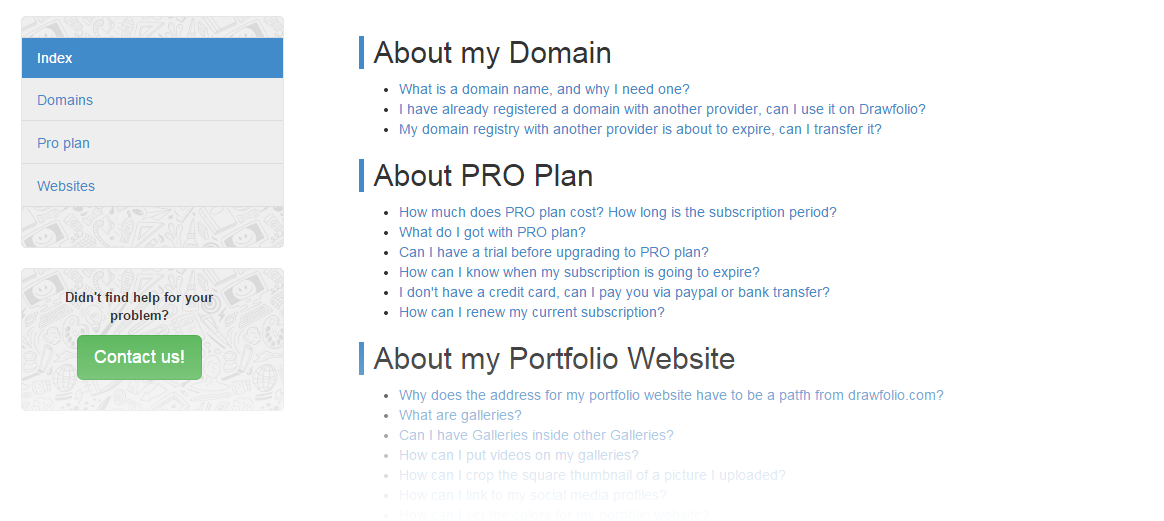
This is just the first step to have the most complete help center we can build. Aside from adding new answers to problems, we are planning to include:
- Videos on the answers relating Drawfolio features.
- Search box to be sure you find answer to your problems as fast as possible
- CSS Recipes for advanced customization of your portfolio website.
What do you think? If you have suggestions or ideas for things to be included on the help center, please contact us at uservoice or write us at [email protected].
