14 Oct 2014
Next in our series of interviews is Alex Mathers, awesome illustrator from UK who has worked with clients such as Google, Sony, Washington Post or Wired Magazine. He also runs Red Lemon Club, a quite known blog where he writes business and marketing tips for professional illustrators.

Where did the road to become a successful illustrator began for you?
Contributing stock illustrations to a stock website for pocket money. It began attracting client work and I went freelance a couple of years after adding my first stock illustration!
How did you end specializing on vector map and landscape illustrations?
Specialising was something I was aware that I needed to do based on what I was seeing around me in the work of other illustrators and designers. I ended up focusing on map and landscapes because I love to do them. This coupled with my awareness of needing to stay focused on a speciality, meant I honed my skills in this area above anything else.
Did you see a niche market opportunity there, is it a personal preference, or maybe both?
It's a bit of both!

You have worked for big clients like Google, Wired, or Washington Post. What is it like? Any hints
for illustrators who are trying to reach this kind of clients?
Yes, it was great fun working with bigger name clients. Work on this balance: creating work that is considered 'cool' yet different at the same time. Create your unique take on what is 'hot' or 'cool'.
What qualities does a client and project need to have for you to feel comfortable and motivated?
For me, a great client is one that allows me to work on something that contributes to some positive change in the world, especially projects that will be seen by large numbers of people. A good client is also one that allows for plenty of my own creative input.
What good (and bad) things do you feel the Internet and the new technologies have brought to the illustrator profession?
Modern technology has made illustration more high profile than ever before. The Internet is what got me into illustration in the first place, and the access it gives you to a global audience and global clients is amazing. The web has allowed me to live a flexible and nomadic lifestyle, earning good money doing what I love to do.
The biggest issue with the net is distraction. It's the responsibility of the illustrator to avoid distraction. The competition it creates keeps you moving forward.
And last, but not least: any advice for aspiring illustrators just starting up their careers?
Yes, work hard building up a solid, beautiful portfolio that demonstrates you understand what is sought after, but in your own highly unique way.
Thanks a lot, Alex!
06 Oct 2014
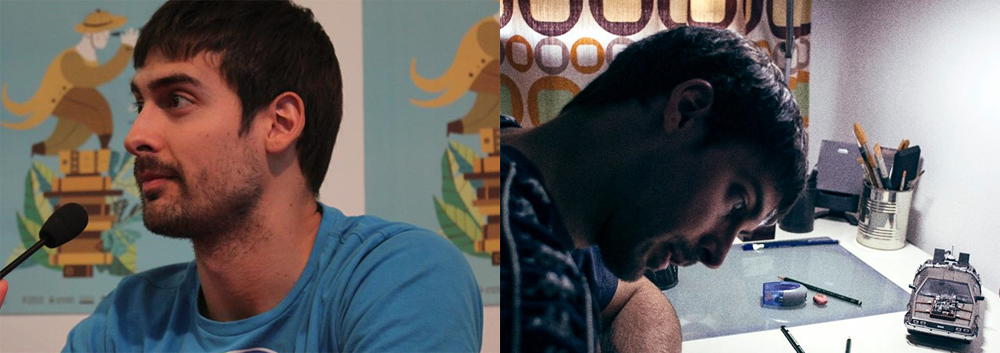
Here we bring you another installment of our illustrator interview series. This time we interviewed Pere Devesa, a great artist from Valencia and one of the first paying customers of Drawfolio.
Pere has worked for editorial projects for the children and young adult publics, but as we'll see in the interview, he is capable of a wide range of work.
How did you get into the world of illustration/comic books?
My first payed illustrations were for a school editing their own children text books. I put a lot of effort and didn't have as much as pressure with a big publishing project, but it would become my entry to the professional world.
As for comic-books, I only have developed some short ideas for contests and won some recognition. If I get into a comic-book project in the future I'd go straight to publishing firms.
You worked in a lot of children illustration and illustred album projects. How is working with publishing firms? Is it your main focus, or do you work on other types of projects?
Like in other proffesions, deadlines are the main headaches. In my second project I spent six months making five or six illustrations a day (two in a day felt like "holidays"). The client was glad with the outcome, but I wasn't at all, although I learned a lot in the process.
I recently started workign with an US agency focused on the publishing market, but I'm also trying to broaden my portfolio on other fields like animation and videogames, where I had some collaborations lately.

How do you manage deadlines and stages for a project? Which type of client and project makes you feel most comfortable and motivated?
Deadlines are given by the client and you seldom have the time you'd like to accomplish the project. But aside from this, I don't need very much to feel comfortable with client work. A percentage of changes and corrections given by the client is usually in the terms of the deal, and as long as these changes don't mess up with deadlines or budget, everything will be fine.
What can be a real stopper is the client forcing you on a graphic style which is totally opossed to yours, but this doesn't happen very much.
What good (and bad) things do you feel the Internet and the new technologies have brought to the illustrator profession?
I can't think of any bad side about new technologies. They make the market bigger and open new paths where a lot of graphic artists can find their place.
Internet gives you a lot of inspiration and knowledge to feed yourself on, and allows you to build your own visibility in virtually any country. Obviously, you have to see it as a tool and not a way of "working", or then you'll find yourself spending all day finding new artists or watching video tutorials, instead of working on your own productions!
And last, but not least: any advice for aspiring illustrators just starting up their careers?
The best advice I can give is a really simple one. You really have to think where you want to be in the future, what others have done to get there and dedicate yourself full-time to achieve that. Constant work and focus is essential, but also is giving that work visibility and promotion.
Thanks a lot Pere!
30 Sep 2014
Hi there! We have been busy interviewing some illustrators from Spain and abroad, to bring you their perspectives on the profession and its relations to Internet and technology.
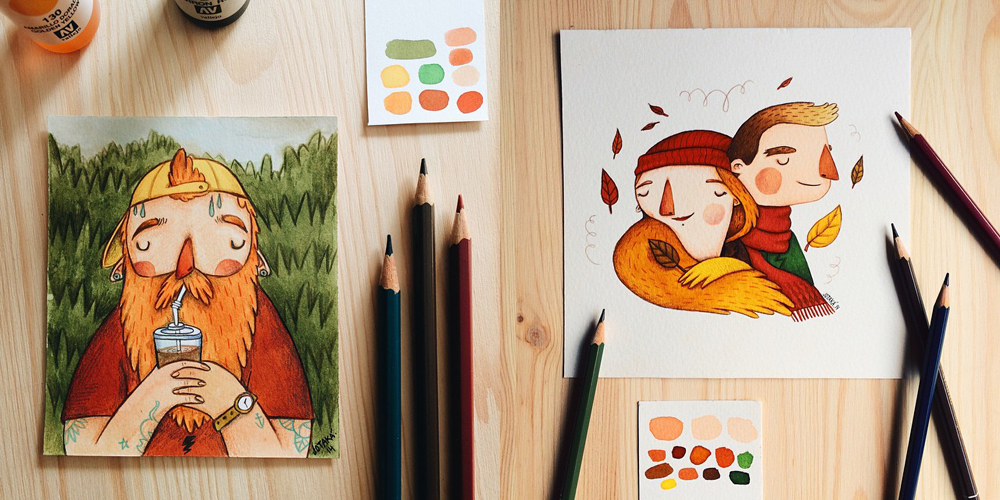
Today, we are opening this series with Jotaká, a great artist from our home town, Valencia.
How did you get into the world of illustration?
Since I was a kid, I always knew I wanted to draw and that I enjoyed doing it. I took courses on academies to help me get better at drawing and being creative. I studied Fine Arts at college and illustration later on. I actually didn't know that what I wanted to be was called "illustration" until I got to university!
Which type of client and project makes you feel most comfortable and motivated?
Character design is what motivates me the most in a project. Also, I look for projects where I can get better as an artist and where I can learn new things every day.
You have recently worked with startups such as Neonmob, who try to give a twist to traditional business models around illustration. Do you think this is a trend and more and more business and projects are going to appear around illustration, or is it just "the heat of the moment"?
There is an "illustration heat", as you say, but I don't think is just a timely fashion, it will probably get bigger! Each day more illustration is used in publicity projects, even becoming a substitute for traditional photograpy. The illustration boom is here to stay!

Where do you find inspiration for your work?
I find inspiration everywhere: blogs, websites, shopwindows..
I always loved Picasso and his work has been a great influence on the way I build charaters. But there are great versatile artists nowadays, like Steve Simpsons. His work is just faultless.
What good (and bad) things do you feel the Internet and the new technologies have brought to the illustrator profession?
It's way more easier to get your work visible, and that's great. I think social networks and the Internet are some of the reasons behind the "illustration boom" becoming a reality. You can work for clients in other countries with just a few clicks.
The bad side? Well, there's a lot more demand and more illustrators than work! Just joking, I think Internet and technology are overall positive.
And last, but not least: any advice for aspiring illustrators just starting up their careers?
My teachers used to say to me: work and work again. And I would go: "Great, but I already know that, tell me something new!"
But it comes down to that: working, reinventing yourself, trying thousands of ways to draw a head, a hand, a flower pot, being different from the rest, and observe how the big ones and the little ones are working.
The tools or software that you are using is not going to make you win if you don't have talent and work every day. So thanks to my teachers!
And thanks to you, Jotaká!
22 Sep 2014
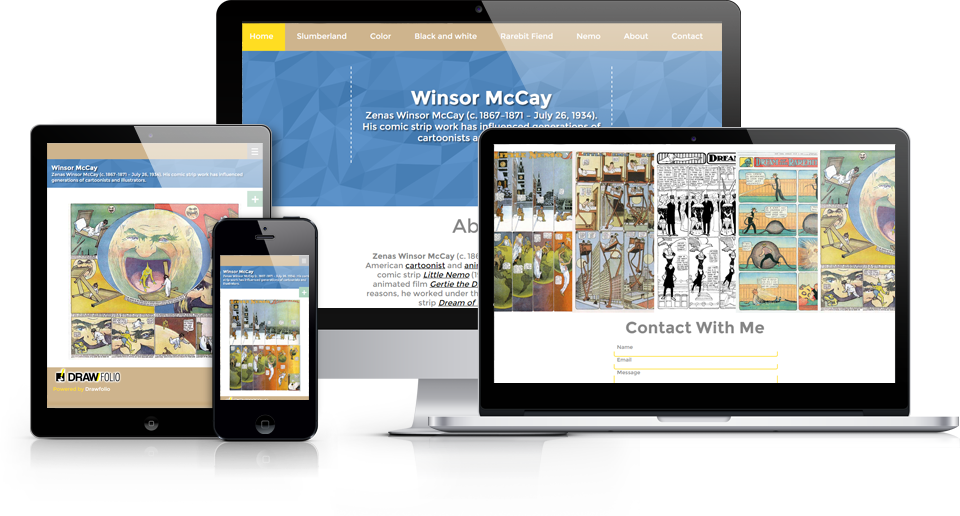
If you thought that we were finished with new templates for your portfolio websites.. well, you were wrong! Our new template is named after Winsor McCay, cartoon pioneer from the beginnings of the 20th Century who had enormous influence on comic, illustration and animation.
Just like the big newspaper pages where McCay's "Nemo in Slumberland" was first published, the home of this template is a true landing page that brings together galleries, personal information and contact form. Aside from customizing colors, the title background image can also be setup to your linking.
For any doubt, question, suggestion or problem, please contact us at uservoice or write us at [email protected].
01 Sep 2014
Enjoyed your holidays? We can't deny we did go to the beach once or twice, but we have also been working on new templates for your portfolio websites. This time we bring you a dark-coloured and minimalistic template that looks great on any device and is named after one of the pioneers of abstract expresionism: Jackson Pollock
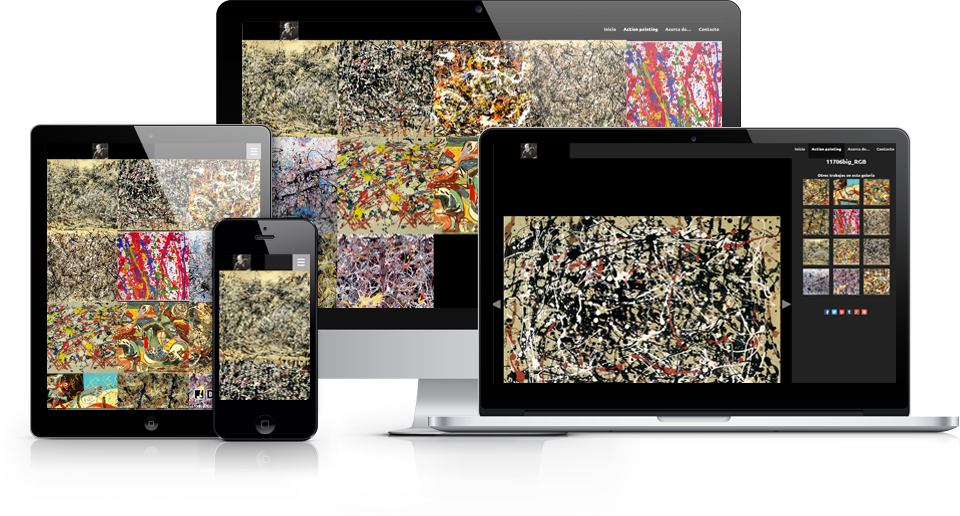
We also worked on a new feature that a lot of you have been demanding: the ability to sort children galleries. Just click "sort children" on the gallery list, and you can sort the children galleries for that parent gallery as usual.

For any doubt, question, suggestion or problem, please contact us at uservoice or write us at [email protected].
