
Interview with Principia Magazine
This time we are bringing a very special interview to our blog. Principia is an independent scientific divulgation magazine with illustration and design deeply engraved in its DNA. For us, Principia is one of the most awesome projects in the indie magazine scene at Spain. We met its founding team at Ilustrisima ABC 2016, and naturally, we couldn't resist interviewing them!
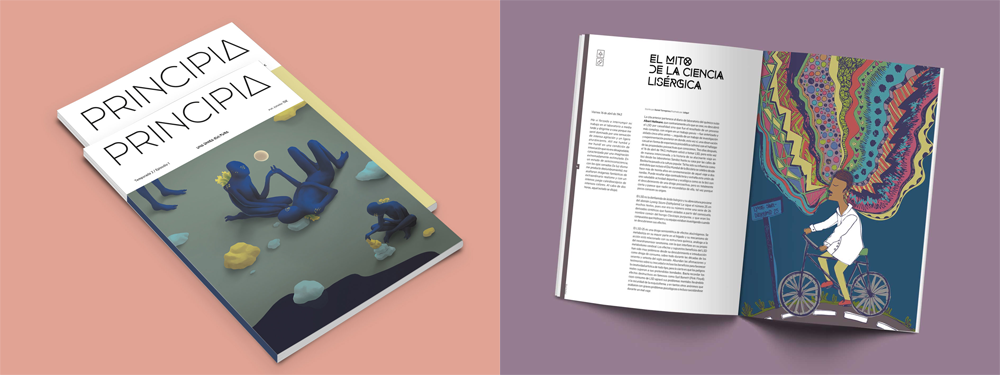
Tell us a bit about Principia: How were the project and magazine born?
Principia was started as a online platform in 2014, and in July 2015 the paper magazine was born. For the printed version of Principa Kids, we had to wait until November 2015. However, our experience on the science divulgation world comes from 2009-2010, when we developed two projects: a science social network and a digital magazine where we learned a lot, and also came to realize we didn't want to continue working on that direction.
We saw how our articles weren't going further from the academic and science world, and decided to change focus. That's why we spent more than one year thinking what to do and how to do it, event studying master courses to learn how to actually make professional projects, and Principia was born from there; a publication where we claim science as part of culture itself, where science is the connecting thread, but does not need to play the main role. A publication that uses illustration to delight readers and make concepts stick, that has literary texts and an elaborate narrative, and makes science something entertaining and quotidian from an humanistic point of view. Because science never stopped being part of the human studies, no matter if some people would like it that way.
Who's behind Principia? Tell us about the founding team and collaborators
Principia co-founders are Cristina Escandon, our art director, who also has a biology degree and works as graphic designer. Javier Díaz-Romeral is software engineer and our technical manager (having a technical guy in the team is great), and myself, Enrique Royuela, Microbiology, phisiology, and genetics Phd., (also did a Creative Web Design master course), and maybe the most visible head of Principia (an obligation of sorts, actually).
As we were only three people, we decided that all three of us would be managers. We actually don't manage anyone, but it was a unique chance to tell our family we were Managers! On sunday family meals, managers always get the most big and juicty chicken piece.
There are also two deeply involved people since the beginning: Rafael Medina and Silvia Mielgo, whose daily and selfless work makes things way easier for us.
As it happens on big scientific discoveries, help and collaboration from lots of people were needed to make this project a reality. That's why we thank all the Principia family for their generosity and trust in the project: nearly 300 writers and illustrators, and also our readers and subscriptors.
That's the only way we can compete against the big media, or other initiatives funded by the government. The game loses a bit of fun if you don't put in it your own money (and health), right?
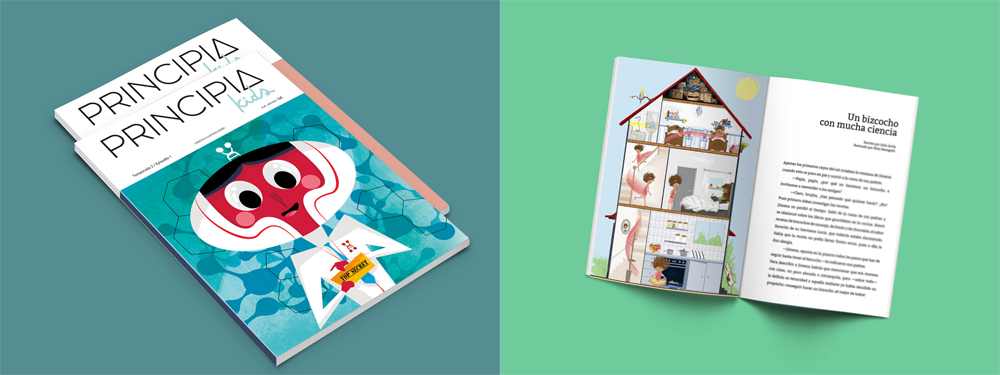
One of the things we like the most from Principia is the bet you do on illustration and the concept of "One Single Culture". Which is the reason this artificial wall between culture and science exists, and what can be done to tear it down?
These are the things we like the most from Principia, too. Our motto, "One Single Culture", it's not just an slogan, it's an assertion we do with every gesture, every web article, every issue we publish. This was clear to everyone when we signed up to Premios Bitacoras (a national spanish blog contest) on the Art & Culture category. We had to stick to what we said. And, we won the prize! It demonstrated that Science is Culture, at least for the judges of the contest.
With "One Single Culture" we affirm that there is no separation between science and humanities. These are artificial categories that can be handy on some situations, but are useless to label persons. Science or Humanities? Why do I have to choose between them? That's our answer: you don't have to choose, because culture is knowledge.
The breach between the so called "humanities" and science comes from far long. I won't bore you talking about Charles Percy Snow. But what I want to say is that the task reducing that breach lays in our hands. We have to stop using awfult terms like "scientific culture", because when saying that you are already admiting that there is a "science culture" on one side and a "general culture" on the other. And that's a lie. We can understand that some can benefit from that differentiation, specially in academia, and that the term "scientific culture" can be well-intended to show that science is also culture. But we cannot stop there. If we did, our contribution would be actually self-defeating.
What do you need from an illustrator to feel comfortable working together?
Our relationship with our illustrators is always tight and easy. They usually are super-receptive to our perspective on science, culture, and knowledge. Every article needs a different style, and the participation depends on each artist. There's an insane amount of quality among our collaborators, so it's really easy counting on them.
We really find easy to work with illustrators, designers, painters, sculptors, and other artists. We learn a lot of them because working with them makes us think backwards of what we usually do: when we see an illustration based on an article we can see if what we wrote really transmits what we wanted to tell, or discover new perspectives to it. Learning through conceptual illustrations is awesome and a must for us.
You made a bet on self-publishing from the very start. What advantages does self-publishing have versus traditional distribution, and what do you think of the future of self-publishing?
Well, we bet on self-publishing because the current system of publishing didn't leave us any other option. If you want to release a product you love you have to invest yourself, or with the help of crowdfunding backers, as we did with the first issues of Principia and Principa Kids. When your work for the big media, your freedom is severely restricted. We don't depend of a editorial line set up by sponsors, so we really can release what we want, given it complies with our quality and rigor standards.
This seems all pretty and fun, but it's not always like that: building a self-funded project like this it's really hard. After two years, none of the founders got a penny for our work (we edit, design, illustrate, write, correct, etc), while we payed all contributors for they work on every issue, and re-invested incomes on following issues. This can be really tough. But we also understand that our project needs at least other two years of hard work to be profitable. When you self-publish and self-fund your project, everything is way harder. Fortunately, we also found awesome people along the way, like Raquel Blanco, manager of independent distribution firm Liberantes (we are all very indie around here, you see), who knows book sellers very well and has helped us a lot.
We believe self-publishing is a very good way to boostrap an editorial project, but beware: this can lead you to "amateurism" in no time, and that's not the most appropiate attitude to have for a project in the long run. As I said before, the three Principia founders prepared ourselves meticulously befoure starting this to be as professional as possible.
And last but not least: What is being cooked right now at Principia? What new stuff can be expet??
Well, we are preparing a lot of stuff at the same time!
We organized a event next 11 Februrary for the International Day of Women and Girls in Science.
We are also running a social project with an expo called "Shelter Science", where we want to talk about the refugee drama with examples of scientists who were refugees themselves at times of war. This project is early stages yet, but you will be able to see more about it soon.
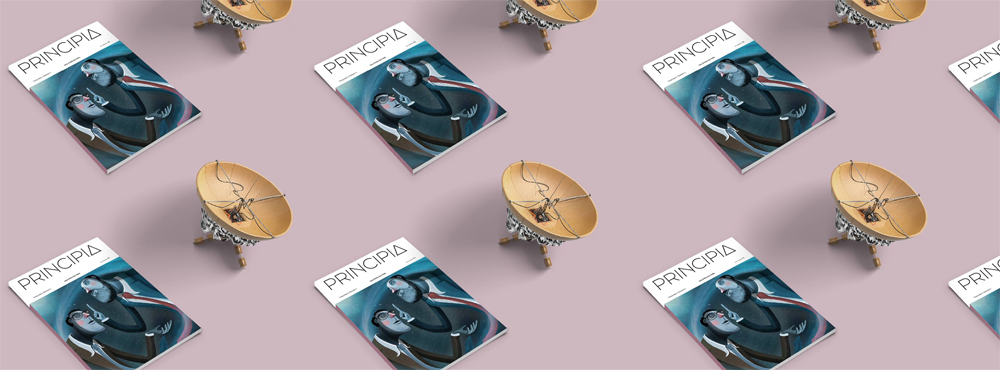
On the editorial side we are working on the new season of Principia Magazine and Principa Kids. Next issues will bring some surprises that readers will love, playing with a very daring concept that will make our third season a truly collectors item, on both text and illustration.
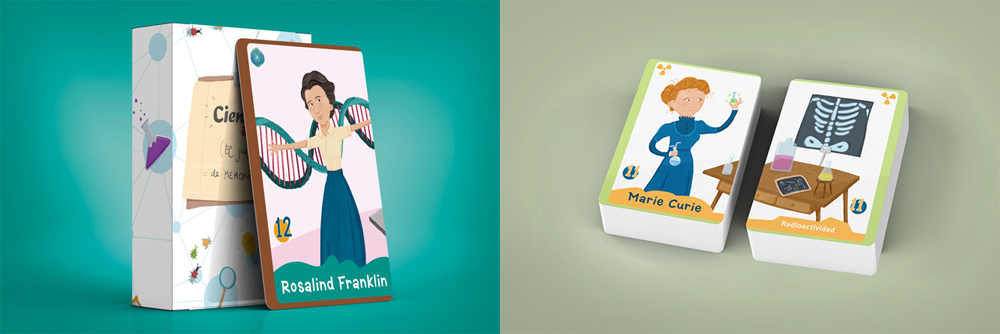
We are also thinking of releasing a second parte of our card game "Ciencia a pares", with other ten female and male scientists.
But this year will be the first where we work on other editorial projects than the magazines, like an illustrated children album about creativity, a book about women in science called "She", and another suprise I can tell very little about, only that is Mars-related. As you can see, lots of stuff, lots of work, little time, and less money, but huge amounts of imagination and hope.
Thanks to you Enrique, and also thanks to the rest of the team!


