12 Jun 2017
They always say Devil is in the details: the small things are the ones who make easy your day-to-day, but they can also be what makes that day extremely frustrating. That's why we keep improving Drawfolio: we want our small details to make your life easier, not the other way around.
For example: until now, you could choose the order of the galleries list in your website's home. But they were always all the public parent galleries, and you could not do much else to customize that. That's why you can now include or remove any public gallery (parent or child) on the galleries index at your site's home: just go to "Galleries" -> "Setup galleries index".
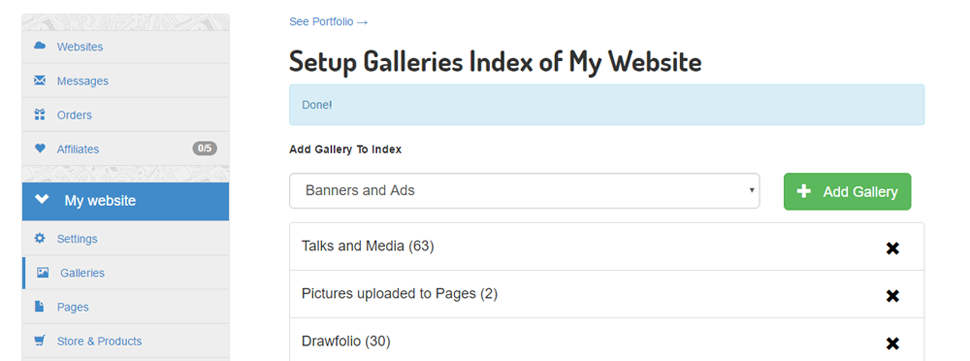
Also, some of our users were asking us to let them op-out from showing all the children galleries in the menu navigation, so you can now disable that in "Main menu and navigation" -> "Other menu options."

For any doubt, question, suggestion or problem, please contact us at uservoice or write us at [email protected].
18 May 2017
In addition to having an awesome portfolio website that helps you to build a personal brand, having information on what content is working better towards your audience is key.
Thats way, since the very beginning of Drawfolio, we set up an analytics dashboard for our PRO users with information about the traffic their websites is getting. But, honestly, there was room for improvement, and information was not visual and easily understandable enough.
That's why we worked to improve the analytics dashboard, and now we show a much more visual ranking on what pictures and galleries are having more audience in your site. We hope you find it useful!

For any doubt, question, suggestion or problem, please contact us at uservoice or write us at [email protected].
25 Apr 2017
On the last interview we made on this blog, we talked with the founders of Principia Magazine, so we really wanted our next interview to be with the team behind our favourite art & illustration independent magazine: Minchō Magazine.
We are lucky to know the founders of Minchō from its early stages (we actually were advertisers on the firt issue), so it was about to made them a proper interview. We hope you enjoy it!
Tell us a bit about Minchō: How were the project and magazine born?
Minchō was born from a previous editorial project, Linea Curve magazine. After the sudden closing of this publication on 2013, we started another one with the same goals: to give more visibility to the great artists behind cartoons, newspaper comics, publicity, music album covers, children books, and some contemporary icons unkown to most people.
And we did this with a new attitude, a new team, more focus on design, and riskier contents. All to make Minchō become the proof that second parts can be awesome.

Who's behind Minchō? Tell us about the founding team and collaborators.
The founding team of Minchō are Francisco Carrasco, who graduated in Fine Arts in AKI ArtEZ (Enschede, Holland), and was editor at the illustration Magazine Linea Curve, and Natalia Giménez, Art Historian specialized in contemporary art with a wide experience in teaching and cultural management. But when we talk about team, we must talk about our wide network of collaborators. Minchō is a reality because technology enabled us to connect with great professionals from all over the globe, and because of their personal bet and effort, and also our romanticism (and sometimes lack of pragmatism) that keeps us learning and growing strong.
What is your production process? How is each issue of Minchō cooked and built?
Despite what it may seem after seeing the careful design, bilingual edition, and international distribution, everything except printing and sewing is done at home! So we could say the "cooking" of each issue is almost a literal thing, as each issue is created both in the office and while we are cooking spaghetti on our home's kitchen.
Aside of working together, we are a couple, so we live in a non-stop brainstorming. Each issue is impatiently created from a continous questioning and our need to share our views on illustration and graphic design. On this personal "vomit" that we call Minchō, you will find a lot of our passions, mainly about contemporary art and independent publishing.
We have also been organizing the stuff we want to show, making each issue thematic, and linking the different sections of Minchō (illustration, animation, comic, design, or children albums) to the cultural present with humor, psychedelia or forklore representation as the conducting thread.

One of the things that we think make Minchō unique is that Illustration, Animation, and Comic are dealt as what they really are: Art. Why this disciplines are often though as "minor"? How can we end with this stereotypes? What do you look for on the artists your feature on the magazine?
This is because traditional art theory, where fine arts are distinguished from the applied arts, or "minor arts". There is still a long road to walk in order to undo this, withs efforts going back as early as the Arts & Crafts movement, from a century and a half ago. Even in the 60s, the Pop artists introduced advertising design or comic books in their work, with a lot of controversy from some part of the art critique. That's why we devoted our section "The New Contemporary" to show up this intersections between art and illustration/comic/animation to help end the cultural hierarchies.
About dealing with illustration as art, we do it because it deserves to have its own theorical framework, which is usually linked to art history (drawing is the common ground of all visual arts). But we have to bear in mind illustration is a discipline tightly coupled to design and market, though. Illustration must build its own space, as graphic design did in the 80s, and Minchō is born to help to this process of analyzing illustration from a solid critic framework.
Minchō is spreading internationally, not only on selling points, but also on collaborators. How did you manage to reach so many people abroad?
The good thing about a small, independent project, is that it can be more versatile and has more room to adapt or being creative. From the very first moment we knew the magazine had to be global project, as very few publications like this exist internationally. We were conscious that thanks to the online media (and Drawfolio knows also a bit of this), old frontiers of mainstream are falling down, art ideas travel faster, niches spread, and quality prevails.
There is a lot of management work behind this, though. International distribution is not an easy road to go down, and being on fairs and events is key to get yourself known.

And last but not least: What is being cooked right now at Minchō? What new stuff can we expect?
The activity of Minchō Press goes round the magazine, which is itself a mutant project that re-invents itself each two years with a new editorial design. But we are also open to collaborations that can boost the project, so you will also find us on contemporary art fairs or as teachers on illustration courses.
We are a bit unmpredictible, so if we dared to publish the latest from Yuichi Yokoyama, who knows what can be next! We've got plenty of ingredients on the fridge and the stoves are on.
Thank you a lot, Natalia and Francisco!
15 Feb 2017
As you know if you upgraded your account to PRO plan, one the available features is having your own contact form in your portfolio website. This makes things really easy for people to contact you, but it also has some risks: it makes possible for spammers to send you undesired messages, too.
We are always working on the technical side to make things hard for spammers, and today we are integrating Drawfolio with Akismet, one of the best spam detection platforms, which is widely used on the Internet, specially on sites using the Wordpress platform.
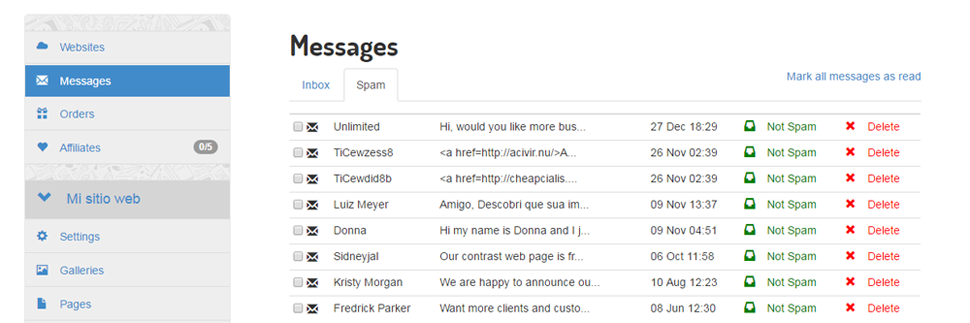
You also have a "Spam" folder on "Messages", where you can see the messages Akismet did automatically classify as Spam, and mark other spam messages you could have on your Inbox (or do the other way around, in case of false positives).
For any doubt, question, suggestion or problem, please contact us at uservoice or write us at [email protected].
09 Feb 2017
This time we are bringing a very special interview to our blog. Principia is an independent scientific divulgation magazine with illustration and design deeply engraved in its DNA. For us, Principia is one of the most awesome projects in the indie magazine scene at Spain. We met its founding team at Ilustrisima ABC 2016, and naturally, we couldn't resist interviewing them!
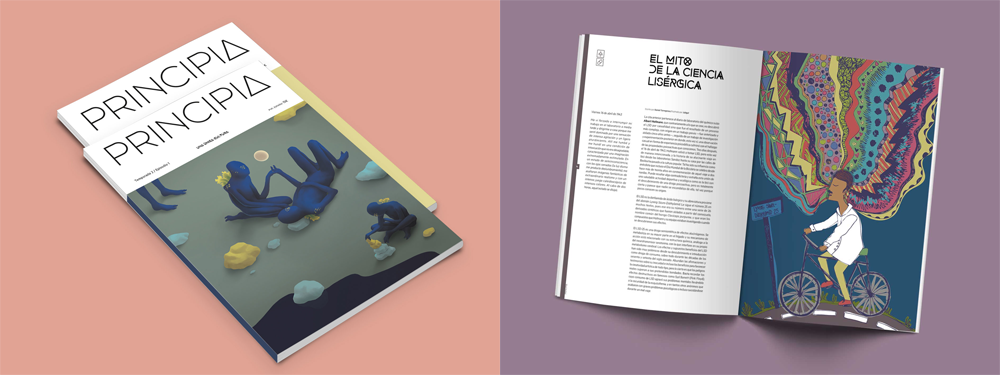
Tell us a bit about Principia: How were the project and magazine born?
Principia was started as a online platform in 2014, and in July 2015 the paper magazine was born. For the printed version of Principa Kids, we had to wait until November 2015. However, our experience on the science divulgation world comes from 2009-2010, when we developed two projects: a science social network and a digital magazine where we learned a lot, and also came to realize we didn't want to continue working on that direction.
We saw how our articles weren't going further from the academic and science world, and decided to change focus. That's why we spent more than one year thinking what to do and how to do it, event studying master courses to learn how to actually make professional projects, and Principia was born from there; a publication where we claim science as part of culture itself, where science is the connecting thread, but does not need to play the main role. A publication that uses illustration to delight readers and make concepts stick, that has literary texts and an elaborate narrative, and makes science something entertaining and quotidian from an humanistic point of view. Because science never stopped being part of the human studies, no matter if some people would like it that way.
Who's behind Principia? Tell us about the founding team and collaborators
Principia co-founders are Cristina Escandon, our art director, who also has a biology degree and works as graphic designer. Javier Díaz-Romeral is software engineer and our technical manager (having a technical guy in the team is great), and myself, Enrique Royuela, Microbiology, phisiology, and genetics Phd., (also did a Creative Web Design master course), and maybe the most visible head of Principia (an obligation of sorts, actually).
As we were only three people, we decided that all three of us would be managers. We actually don't manage anyone, but it was a unique chance to tell our family we were Managers! On sunday family meals, managers always get the most big and juicty chicken piece.
There are also two deeply involved people since the beginning: Rafael Medina and Silvia Mielgo, whose daily and selfless work makes things way easier for us.
As it happens on big scientific discoveries, help and collaboration from lots of people were needed to make this project a reality. That's why we thank all the Principia family for their generosity and trust in the project: nearly 300 writers and illustrators, and also our readers and subscriptors.
That's the only way we can compete against the big media, or other initiatives funded by the government. The game loses a bit of fun if you don't put in it your own money (and health), right?
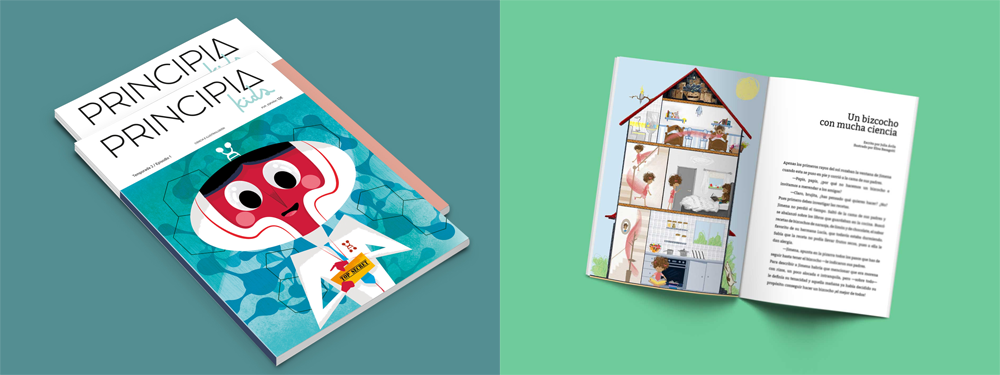
One of the things we like the most from Principia is the bet you do on illustration and the concept of "One Single Culture". Which is the reason this artificial wall between culture and science exists, and what can be done to tear it down?
These are the things we like the most from Principia, too. Our motto, "One Single Culture", it's not just an slogan, it's an assertion we do with every gesture, every web article, every issue we publish. This was clear to everyone when we signed up to Premios Bitacoras (a national spanish blog contest) on the Art & Culture category. We had to stick to what we said. And, we won the prize! It demonstrated that Science is Culture, at least for the judges of the contest.
With "One Single Culture" we affirm that there is no separation between science and humanities. These are artificial categories that can be handy on some situations, but are useless to label persons. Science or Humanities? Why do I have to choose between them? That's our answer: you don't have to choose, because culture is knowledge.
The breach between the so called "humanities" and science comes from far long. I won't bore you talking about Charles Percy Snow. But what I want to say is that the task reducing that breach lays in our hands. We have to stop using awfult terms like "scientific culture", because when saying that you are already admiting that there is a "science culture" on one side and a "general culture" on the other. And that's a lie. We can understand that some can benefit from that differentiation, specially in academia, and that the term "scientific culture" can be well-intended to show that science is also culture. But we cannot stop there. If we did, our contribution would be actually self-defeating.
What do you need from an illustrator to feel comfortable working together?
Our relationship with our illustrators is always tight and easy. They usually are super-receptive to our perspective on science, culture, and knowledge. Every article needs a different style, and the participation depends on each artist. There's an insane amount of quality among our collaborators, so it's really easy counting on them.
We really find easy to work with illustrators, designers, painters, sculptors, and other artists. We learn a lot of them because working with them makes us think backwards of what we usually do: when we see an illustration based on an article we can see if what we wrote really transmits what we wanted to tell, or discover new perspectives to it. Learning through conceptual illustrations is awesome and a must for us.
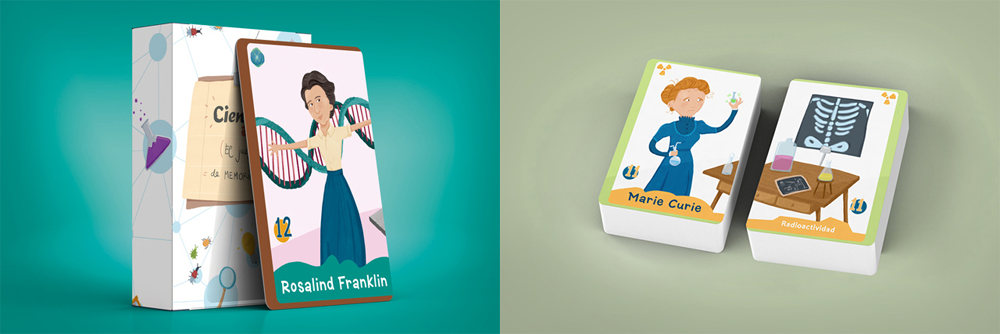
You made a bet on self-publishing from the very start. What advantages does self-publishing have versus traditional distribution, and what do you think of the future of self-publishing?
Well, we bet on self-publishing because the current system of publishing didn't leave us any other option. If you want to release a product you love you have to invest yourself, or with the help of crowdfunding backers, as we did with the first issues of Principia and Principa Kids. When your work for the big media, your freedom is severely restricted. We don't depend of a editorial line set up by sponsors, so we really can release what we want, given it complies with our quality and rigor standards.
This seems all pretty and fun, but it's not always like that: building a self-funded project like this it's really hard. After two years, none of the founders got a penny for our work (we edit, design, illustrate, write, correct, etc), while we payed all contributors for they work on every issue, and re-invested incomes on following issues. This can be really tough. But we also understand that our project needs at least other two years of hard work to be profitable. When you self-publish and self-fund your project, everything is way harder. Fortunately, we also found awesome people along the way, like Raquel Blanco, manager of independent distribution firm Liberantes (we are all very indie around here, you see), who knows book sellers very well and has helped us a lot.
We believe self-publishing is a very good way to boostrap an editorial project, but beware: this can lead you to "amateurism" in no time, and that's not the most appropiate attitude to have for a project in the long run. As I said before, the three Principia founders prepared ourselves meticulously befoure starting this to be as professional as possible.
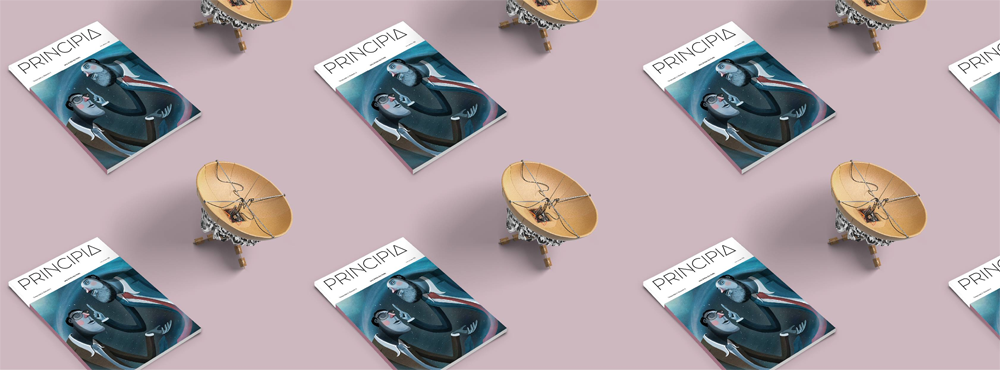
And last but not least: What is being cooked right now at Principia? What new stuff can be expet??
Well, we are preparing a lot of stuff at the same time!
We organized a event next 11 Februrary for the International Day of Women and Girls in Science.
We are also running a social project with an expo called "Shelter Science", where we want to talk about the refugee drama with examples of scientists who were refugees themselves at times of war. This project is early stages yet, but you will be able to see more about it soon.
On the editorial side we are working on the new season of Principia Magazine and Principa Kids. Next issues will bring some surprises that readers will love, playing with a very daring concept that will make our third season a truly collectors item, on both text and illustration.
We are also thinking of releasing a second parte of our card game "Ciencia a pares", with other ten female and male scientists.
But this year will be the first where we work on other editorial projects than the magazines, like an illustrated children album about creativity, a book about women in science called "She", and another suprise I can tell very little about, only that is Mars-related. As you can see, lots of stuff, lots of work, little time, and less money, but huge amounts of imagination and hope.
Thanks to you Enrique, and also thanks to the rest of the team!
