02 Dec 2014
Even more interviews, did you think we were going to stop? On this new instalment, we interview Marina Muñoz, an hiper-creative artist from Valencia who combines diverse disciplines like graphic design, photography and, of course, illustration!.
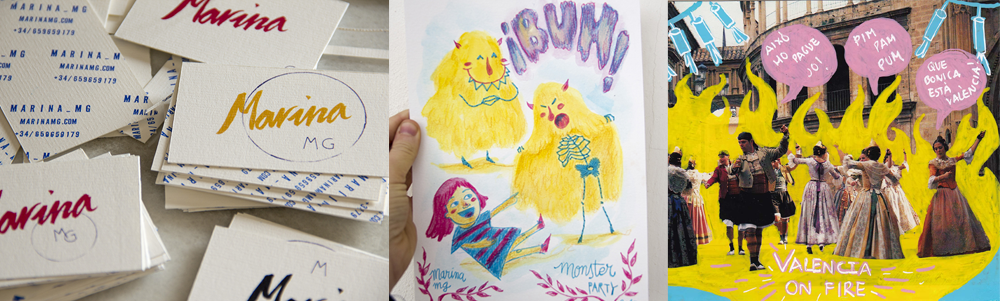
How did you get into the world of graphic design and illustration? Was it what you wanted to do in the first place?
Drawing was kind of a compulsion since I was a kid, as was sculpting. My mother would find me sculpting classes (thanks to Ximo Moroder, potter, to treat me like a proper person even if I was 3!). They also would tell me that I could study Fine Arts when I was a grown up, and I didn't doubt to do so when the time was right. I discovered graphic design by luck: I found out that it was an interesting profession to channel my creativity (I didn't feel like teaching and illustration did seem impossible to me at that time) and pursued a master course in Barcelona to get more experience on that area. I always enjoyed studying, and would like to pursue more studies in illustration, as I now know it is the foundation of my passion in visual creation.
You combine diverse types of work: photography, graphic and identity design, lettering and illustration, personal projects.. Do you think is important to diversify, o would you like to be able to focus on one of these activities?
This comes mainly for my love of learning new things and my own unfocused nature! Some people find my profile interesting while others will say I'm too creative and not "commercial" enough. I think this is better for freelancing rather than having a secured employment position at an agency, so I'm determined to focus on my main strength: creativity. I'm betting on developing my personal or "arty" (I've been also called this) side.
How do you find client and work? What role does the Internet and social media play in this process??
I mainly get clients by contacts and word of mouth, people who has seen my work through other people or friends who recommended me. I'm glad because this way I'm doing a lot of illustration work that I will be able to show soon.
Internet is a pending matter to me. Having a portfolio website is key, but getting clients through it takes time and work, and I want to focus on that right now. I learnt a lot from a serigraphy experiment I did on etsy with some friends (MariMariPi), and now I want to apply all that experience on social media for myself. I see it all like a long distance race.
How do you deal client work, projects and deadlines? What qualities does a client and project need to have for you to feel comfortable and motivated?
I try to set clear deadlines and terms from the very beginning, as projects usually tend to extend themselves over time (usually due to clients). I learnt this the hard way: not having this matters set up front can make the project a total mess.
I feel comfortable when there is good communication and I feel respected as a proffesional (and the client does not waste my time). If you add creative freedom, good fees and an interesting project, you got the perfect work!
And last, but not least: any advice for aspiring illustrators just starting up their careers?
Don't make the same mistakes that I did! Draw a lot, build a portfolio and promote it on the right platforms, social channels, agencies, etc. Start charging for those "cute drawings" that your friends like, try to auto-publish yourself. Don't get overwhelmed by fears and insecurities! There are thousands of great illustrators but you've got your unique voice: work it and improve it, if you show it to the world something awesome can happen!
Thanks a lot Marina!
12 Nov 2014
We are back with our interview series with more great artists from our home city, Valencia. This time we had the great pleasure of interviewing Laura Pérez, in our humble opinion one of the most important figures in the spanish illustration scene, who works regullarly with clients such as The Washington Post, The Wall Street Journal o National Geographic (among others).
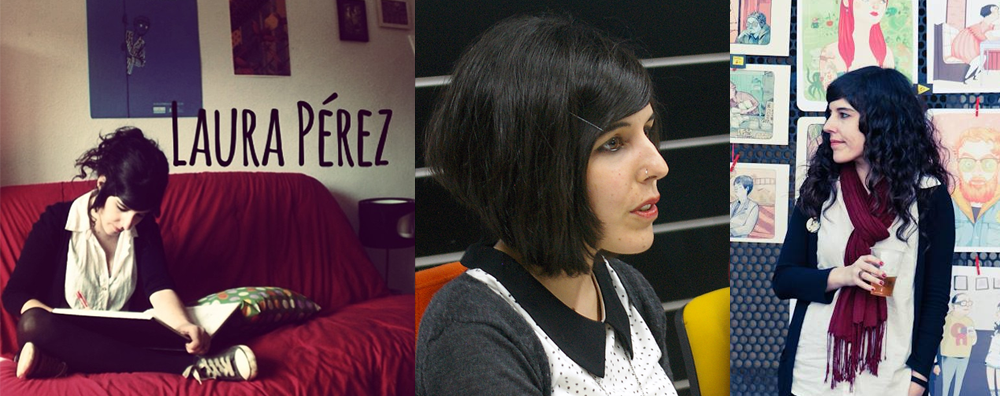
How did you get into the world of illustration? Was it what you wanted to do in the first place?
Everything started with me getting in the Fine Arts Degree at University (my other option was psychology). Being there I saw clearly that drawing was what I could do best. I learned more about color theory later, and illustration was the field where I could combine both subjects. I had found what I wanted to do!
I decided to send my work to a lot of free and paid platforms on the Internet, and on one of them the Anna Goodson Illustration Agency (Canada) did notice me, and I haven't stopped working since then. I also work with Pencil Ilustradores (who are based in Spain), so I can mix work from Spain and abroad, as well as personal projects.
I just didn't know whant I wanted to do, just drawing, but I didn't know how this passion would become a profession. It looks it did!

You have worked for clients in UK, USA, Canada.. Are there many differences between those markets and the Spanish market? What is the best way for illustrators to reach this kind of clients?
The main differences are budgets and deadlines. Most companies from USA have really long instalments, so the artists can develop better their work. But there also spanish companies working this way now. I used to generalize more in the past, but now I see good and bad things in all markets. Organization and planning is key to make everything work as good as possible, wherever you are.
The best thing an illustrator can do is to internationalize her portfolio (english is better) with topic variety (but not style variety). And always be aware of the trends out there.
What qualities does a client and project need to have for you to feel comfortable and motivated?
It needs to "click" with me, the ideas I have to express have to be aligned with what I would do. Coherent instalments and deadlines are very important to make me feel comfortable.
Early this year you organized Valencia Illustration Circuit first edition. How did it all start, and how was the experience? What new things are coming with the next edition?
It all started small with a collective exhibition, and then it all grow quickly to other venues. The results overexceed any expectations I had, and this year we've got a lot of novelties coming: the team behind is bigger and the agenda will be broader. More news coming soon!

What good (and bad) things do you feel the Internet and the new technologies have brought to the illustrator profession?
With the Internet you can reach any place if you are really determined to. Emails, links, access to information: it's so huge that is very easy to reach but very difficult to get focus.
The negative side is that the huge overload of information can be overwhelming for some: it can block your imagination rather than inspiring it. You have to use it as a tool to reach your objectives, and not a time-wasting black hole.
And last, but not least: any advice for aspiring illustrators just starting up their careers?
Don't give up if your are really passionate about it. If you are tired from drawing and it gives you more pain than joy, then give up. The passion is really what makes a difference.
Thank you Laura!
10 Nov 2014
It was nearly a year since we got our first PRO users, and we have been working to make the whole process of getting the current status of your subscription a lot easier.
If you are one of the PRO customers, now you got more things to see and do at "My account". For starters, you can change all your invoicing data on the "Invoicing data" tab. If you became a PRO user during our private beta period, please be sure to fill in all your data in this tab.
All the information about your subscription is in the "Domain and Subscription" tab. There you can see the start date of your current subscription, and its expiry date.
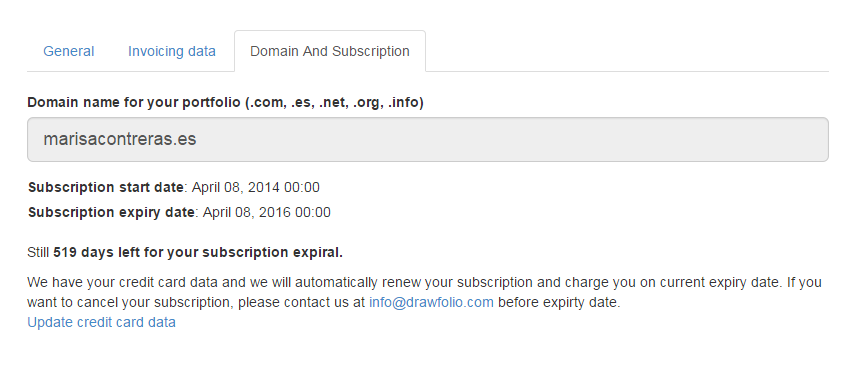
When the time comes to renew your subscription (as we hope you will do!), the are two scenarios you can be in:
If you paid via credit card, you don't have to worry about anything. Unless you tell us not to renew your subscription, we will automatically renew and charge our fee on your current expiry date. If you want us to charge you to another credit card, you can update the credit card data on the "Update credit card data" link.
If you paid via bank transfer or paypal, you can contact us to deal with your renewal payment. And if you now have a credit card available, you can pay for your renewal with it click on the link "Pay now for your subscription renewal with your credit card.". Please be aware that, as it will be the first time you give us your credit card data, we will charge for your renewal on that moment, but a full year will be added to your subscription expiry date.
In either of two situations, please remember to deal with the renewal of your subscription with time ahead. As domain registries are involved in your subscription, we recommend you have everything set up at least 30 days before the expiry date.
For any doubt, question, suggestion or problem, please contact us at uservoice or write us at [email protected].
03 Nov 2014
Next in our interview series is another great artist from Valencia, Luis NCT. Luis is illustrator, comic-book artist and writer: he published Sleepers on 2012 and has worked on RPG and videogame projects, collaborating with very known productions as The Legend of Five Rings RPG or Fantasy Rivals.
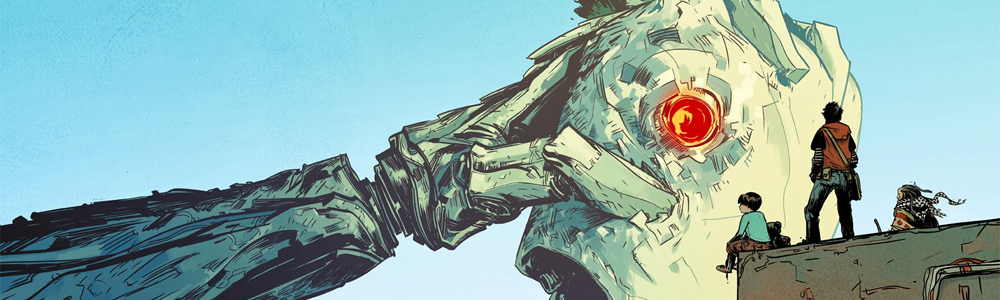
How did you get into the world of illustration/comic books?
I knew I wanted to work on this since I was in school. I made my first comics, illustrations when playing RPG's with friends, etc. I was also attracted to the art world, not just the nerdy stuff, but I thought it could be profitable (and enjoyable) to work on sci-fi and fantasy illustration. I'm afraid I was wrong, because in these kind of projects the time spent and the retribution are not always aligned. And above all, my first and last passion are comic-books.
Which type of project makes you feel most comfortable and motivated?
Aside from personal projects and post-apocalyptic stuff, the two fields where I'm most comfortable is illustration around musical or medieval fantasy themes. Anyways, there are always those times that you got to hate your own work and feel like changing careers to something more useful, forestkeeper for example! Nature illustrations are also very relaxing, by the way.
You have worked in editorial projects both in Spain and in United States. What is it like? Are there many differences between both markets?
You can find both good and bad stories in both places. Outside Spain everything is a bit more professional and cold, and money & contract stuff is way more transparent. In Spain there are many legal vacuums in the illustration profession, no regulation, and the State even forbids Proffesional Associations from publishing recommended fees for the most common works. Is not a matter of markets, but of having serious government and laws.
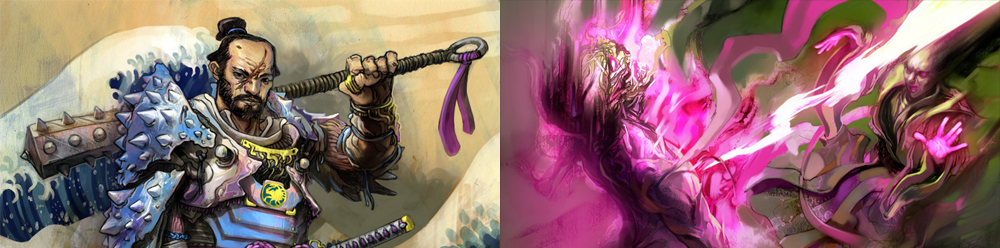
We know you are a great lover of Science Fiction: do you think comic is in better position to connect with this genre than other formats?
I believe comic is the format with most possibilities for narrative duties. There are infinite ways of telling a story through comic, and so few limitations, that any genre can become a masterpiece in a comic.
What good (and bad) things do you feel the Internet and the new technologies have brought to the illustrator profession?
The Positive side: easy communication between authors, editors, managers, etc. Also, you can find information and document yourself on any subject you need. Internet breaks the wall between author and public, and gives you the chance to be aside from the industry without stopping your production (webcomic, crowdfounding)
The Negative side: the oversaturation of information and the repetition of the common places. How many more illustrations of the Ninja Turtles does the Internet need?
And last, but not least: any advice for aspiring illustrators just starting up their careers?
Never stop working on personal projects (and I mean real personal projects, not fanart to give free promotion to Marvel, Disney or HBO), because every person is unique and if she is able to communicate her vision through art, something is lost to everyone if she doesn't.
Another advise: on work matters, always keep the distance between artist and client. That can save you from a lot of dissapointing situations or wasting time.
¡Thanks a lot, Luis!
20 Oct 2014
After releasing two new templates last month, (Pollock and McCay), we have been working on fixing little details that improve the experience of using Drawfolio:
Mark pending messages as read: If you got a lot of pending messages and you already looked them up at your email inbox, now you can batch-mark them as read with the "Mark messages as read" link in the "Messages" section.
Better protection against image saving at browsers: We also prevent picture saving by dragging from the browser, if you had "Forbid copying pictures with CTRL+C and right button click" enabled at your portfolio website.
Better anti-spam protection: We used some non-intrusive techniques on your portfolio's contact form to prevent spammers, whithout having your visitors to fill one of those infamous Recaptchas!
Better blog support: We improved the blog feed integration to support more formats.
Progress bar on background picture upload: The upload process of a background picture to your site is easier and finally has a progress bar of its own.
We also want to tell you about the big features we are woking on next. We really think one of the most important things we can help you on is getting more control of the cloud:
We are working to integrate Drawfolio with other services like Facebook, instagram, flickr or pinterest, so you can save time uploading works to Drawfolio and automatically get them uploaded to your other profiles on the Internet. This is interesting the other way around, too: having your portfolio website synced with a folder in your Dropbox, for example.
We are going to improve the analytics section a lot more, so you can have a quick glimpse in a very visual way of which of your works is getting more attention, and through which channels.
For any doubt, question, suggestion or problem, please contact us at uservoice or write us at [email protected].
Illustration: Hallie Bateman
