02 Jul 2015
One of the things that would appear again and again on our conversations with our PRO customers was the chance to have a personal shop on the portfolio website they had built with Drawfolio. You are may using already some services like etsy or bigcartel to sell your illustration originals or prints, but profiles on these sites are not customizable at all, and your competition is just actually a few clicks away from your profile. Having your store and portfolio in the same website, with your our own .com domain can help to boost sales, make your personal brand stronger and save you time.

That's why we put some weeks of work on this, and we are happy to announce we are launching Stores in private beta. As we usually do, we worked on a minimal prototype to have people work with it as soon as possible, and fit our solution to your specific problems.
We are going to accept invites to the private beta on a regular basis, and you can request one filling this survey. We are designing different combinations of a monthly fee + % of each order for the stores services, but as long the beta endures we will only charge you a 2% from each order you receive.
SIGN IN FOR A INVITE ON STORES BETA
For any doubt, question, suggestion or problem, please contact us at uservoice or write us at [email protected].
29 Jun 2015
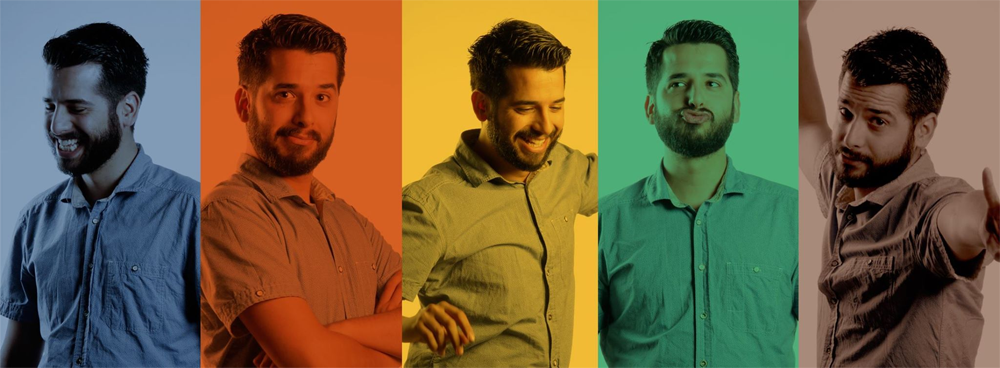
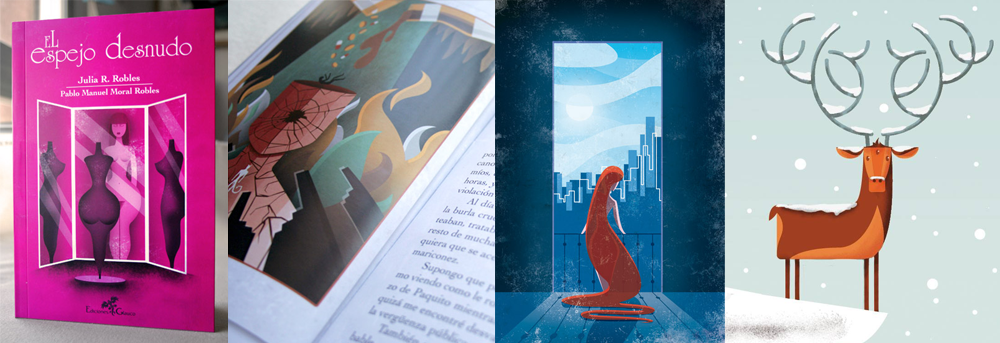
On our next interview, we travelled to Murcia to talk with Pablo Manuel. Pablo works as illustrator for the publishing field, and also founded and managed Ilustrafun, a series of workshops & leisure events around illustration. He is also a PRO customer of Drawfolio, so we couldn't wish any better!
How did you get into illustration and design?
I studied Fine Arts at College, and tried a bit of everything: design, photography, or sculpture. I did a subject on illustration and got interested from there. Two years after I finished my degree, I got on second place of the Badajoz Adult Illustrated Tale Award with "Extrañas mujeres de Azul", and that really made me see I had to devote to illustration.
How do you deal with clients and projects on terms, deadlines, etc?
I work with two main premises: deadline and budget. These will shape the nature of the project. A few days project is highly different from one supossed to be months long, as a three-figure budget looks different from a four-figure one. Aside from that, there are more elements to manage and discuss on a project: concept art, illustration application, etc.
What qualities does a client and project need to have for you to feel comfortable and motivated?
Above all things, I seek that our terms and roles are well defined and understood by both parts. A lot of clients want to dictate changes without an informed opinion, and will stick to them even if you try to reason or argue. That is quite bad for both client and the illustrator. You wouldn't tell a surgeon how to do this job, so why you can do that with illustrators or designers?
You are founder of manager of Ilustrafun, a great initiative looking to add value to illustrators with events and workshops. How did it began, and how was the journey until here?
Ilustrafun tries to bring illustration workshops and events to Murcia and its region, just like the ones who happen at big cities. We tried to bring relevant illustrators to teach workshops, and combine that with leisure activities to make the environment fun and enjoyable. We have done workshops so far with artists such as Malota, Sr. López, Adolfo Serra, Luis Demano, etc.
Everyone, from the teachers to the students and team, were very happy with the results. Nowadays, Ilustrafun is on hiatus due to finance matters: running the whole thing without sponsors or public helps has proved very tough.
We see a lot of startups and projects appearing lately around the world of illustration. Do you think this will continue to grow, or is it some kind of "heat of the moment"?
Illustration has been for a long time in our life, it's not something new. But it definitely has more visibility now, and it's sort of "fashionable". But I don't think the mass public know what illustration is, the reach and different kinds of it, or what fields it is applied to. They see it as a mixture of "artsy stuff" and "knowing how to draw". I don't know if it will continue to grow, but it will stay for sure.
And last, but not least: any advice for aspiring illustrators just starting up their careers?
I had to learn a lot of things lately, and one of them is learning not to compare yourself with the rest of the world. We see facebook, twitter and other social networks and people are making wonderful things. Everyone seems happy, and there is a lot of "awesomeness" around us that does not really reflect reality. Working on an artistic field (be it acting, music, illustration or any other kind of creativity) is not easy at all, and you need to have that in mind.
Every person willing to be an illustrator has her own style, language and path, and my advise would be to follow it. Don't be afraid of making mistakes, keep walking forward and ask for constructive critiques. And above all, be at peace with your work, as I see it as part of ourselves.
Thanks a lot, Pablo!
22 Jun 2015
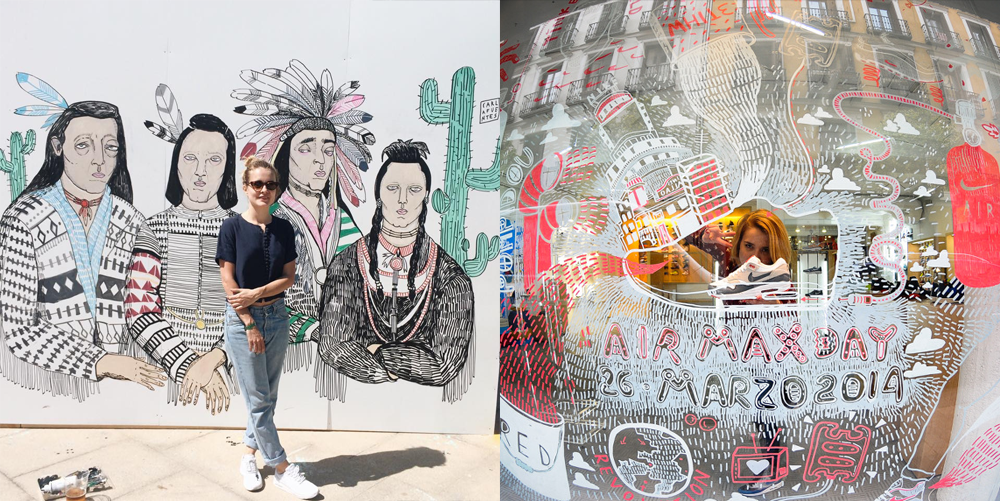
Our next interviewee is Carla Fuentes, better known as Littleisdrawing.
Carla is a freelance illustrator from Valencia, and has worked on a wide range of projects and clients: illustration work with publications such as Forbes, Union Magazine or Squire; projects with brands such as Coca-Cola, Nike, Seagram's or Honda; and work for music bands and festivals such as Pollock, Deleste or Festival de les Arts. She also puts a strong focus on personal projects.
Where did the road to become a successful illustrator began for you?
It was a bit of an accident. I wanted to work professionally on fashion and be a fashion designer. But I began to upload dooddles and small drawings to my fotolog, and work began arriving from there, each time more interesting and professional, until today.
What inspirations sources do you take from for building a unique, personal style like yours?
I get inspired by contemporary artists like Freud, Hockney, Peyton and Eduardo Arroyo. I love how they deal with portraits and the human figure. I take all my inspiration from them.
You worked with big brands like Coca-Cola, Pull & Bear, Nike or Women's secret. How is working with them? How can aspiring illustrators get to work with this kind of customers?
Brands seek exposure through a number of disciplines, and it is great to see them betting on art and illustration as a more creative way to get to their customers. I like working with brands, they trust a lot on your work and usually give you a lot of freedom.
My advise would be being always open to any proposal and let yourself go and find what the brand inspires to you.
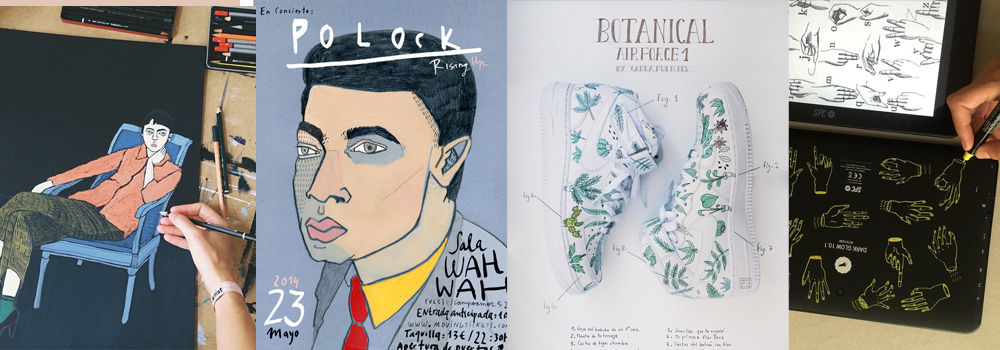
We know you never leave home without your tablet, and you are one of the most "technological" illustrators we know. How do you use technology on your day-to-day? Does it play an important role when managing work and clients?
Technology is something essential to me. I'm always connected to the world through Internet and my computer, and the work I get is always because of the exposure I get from the net. I use the computer as a work tool to scan, refine, etc, and I use my tablet for all the other of tasks, like updating social networks, sketching, etc. In my opinion, technology is indispensable.
And last, but not least: any advice for aspiring illustrators just starting up their careers?
Create something new, with its own personality.
Thanks a lot Carla!

15 Jun 2015
We already interviewed 15 illustrators and artists on our blog, and we thought it would be a good idea to link them all in a single post so you can review them. You will find great insights on a variety of fields and markets, and most importantly: great advise to make your career successful as an illustrator and artist.
28 May 2015
We are back to America once again for our interviews to illustrators, but this time we are heading to Colombia. We had the great pleasure to talk with Jose Rosero, one of the most active illustrators in Colombia and also part of the team behind CasaTinta and Congreso FIG. As you will see, the interview got highly interesting and Jose does not bit his tongue when expressing his views on the illustration and publishing sectors.
How did you got into art and illustration?
Since I was a kid I had some inclination towards art, but I oficially began studying Visual Arts at Universidad Javeriana at Bogotá-Colombia. I liked the syllabum because it opened the art field a lot and had a graphic emphasis, which I was very interested in. During the degree I began distancing myself from plastic arts, which I consider a bit obscure and disattached from everything. My interest is definitely on communicating.
My approach to illustration was a bit of an accident, as it happens with all good things: on my second year at college I made a big format anatomy drawing. I liked a lot the process of creating this particular piece: while my peers where creating nature studies of bodies and gestures, I spent time on reading and investigating how to communicate something more. That's why I decided to base my image on a Jorge Luis Borges tale called "La trama": a short, two-paragraph story that talked about 19 centuries of treasons between human people.
When the jury looked at the piece, they said the bad thing about my piece was that "it looked more like an illustration". That made me think about the creation process that I had enjoyed so much, so I decided to get into every illustration subject my degree had and also to attend to illustration workshops from out of college. I got myself into the illustration world that way, and I made my final degree thesis on illustration to solidify all the concepts I had learned. I also want to say that it was a spanish proffesor who ultimately got me into illustration with his book "Illustration as category": Juan Martinez Moro. He is a brilliant, but little known in his home country. Years later, I would invite him to the first International Illustration Congress we organized in Bogotá.
You got some experience on the publishing world, but we know you have kind of a love-hate relationship with it. Which is, in your opinion, the problems of this sector?
That's right, I have worked with a number of publishing firms, magazines and newspapers. And I felt deeply dissapointed most of the time. They see illustration as a decorative "nice-to-have" and not as a complex thought process that ends on a series of pictures. I had many problems with publishing firms because of thoughtless, absurd changes requests, low retributions and unfair terms. After being in conflict with most of them, I got to the conclusion that most of publishers or art directors don't have enough knowledge about visual arts to make precise or informed requests. That's why they will demand unpaid concepts from you, or may think a black & white image is less valuable than a full-colour one. These and other ignorant attitudes make them to impose their own taste and remove artist's own voice. This way, a vicious circle of low-risk publications is born, with little or no creativity, that drives illustrators to become plain replicators of styles (we are now in the bad-drawing and expressive-stains era). Of course, there are brilliant exceptions to all of this, who maintain the ship afloat.
What qualities does a publisher and project need to have for you to feel comfortable and motivated?
There's a beatiful quote from Angeles Mastreta: "books are conversations". Both publisher and illustrators need to have the gift of dialogue and understanding. A project has to have some challenge and risk of failure. Easy things becomes boring, don't you think?
Aside from your work as illustrator, you act as coordinator of two great projects: FIG Congress and CasaTinta. For our readers outside Colombia, could you tell us more about them?
Of course I can: CasaTinta is placed on Bogotá, and is a space devoted to illustration and graphic arts. It goes up three storeys with gallery, library, design shop and workshops, which we use for a whole events agenda. A component of thought development, critique and profession is always found on what we offer. We have been growing steadily and this year we are on a new building, which evolves our ability to launch things, but also comes with greater responsabilities. We recently won the independent spaces award given by the Ministry of Culture at Colombia, and that gave us a lot of fresh air to go on.
Nothing was free or easy, though: this is an space slowly built step by step. We began on a small apartment room teaching illustration workshops, and with a lot of persistance and work from the team (Miguel Bustos on the graphic area and Diana Arias, the other project support) we achieved to grow and evolve.
At the same time, we've been feeding the International Illustration Congress FIG wich has reached its fifth edition this 2015, and where we had forty illustrators from fifteen countrys and hundreds of attendants. They are four days each year full of conferences, talks, workshops, contests and more. What I love from this event is how much value we were able to give. Something unmeasurable.
We see more and more business and projects appearing around illustration. Do you think this will continue to grow, or is it just "the heat of the moment"?
I do believe there is a "media boom" around illustration and design. Internet has helped a lot to this, and there are more events trying to approach it from different perspectives. I attended some of them myself: three in Spain, and one in Italy, Argentina, Chile, Mexico and Brazil.
Democratizing illustration is great, but I found a dangerous edge on it: a lot of events are born with a kind of shallowness or triviality, trying to fit on something easy and new to reach more public and get better results on networks. But such events end being a series of plain activities, an appetizer of sorts for less demanding consumers. Conferences can be reduced to a walk by the portfolio from a fashionable illustrator (who will probably have a lot of likes on facebook) with some anecdotes and no real value; workshops become light creation spaces with lots of mutual applause; and the rest of activities are very social but not challenging at all.
This can be found also on new spaces: decisions are taken in favour of appealing to a more broad public, and little is offered in the end aside from free beer.
Spanish illustrator Pablo Auladell, in his conference on last edition of the FIG Congress, told us that students from a workshop of him in Spain had complained about his rude critiques and his tough, demanding attitude. Then I asked myself: Would I want to attend a workshop where the teacher is indulgent with everything I make? There's nothing better to improve than a space where your views are shaken, and you are filled with doubts and discomfort. Let me tell you these spaces are possible: I did got that at Albarracín with Isidro Ferrer and Grassa Toro.
I know first-hand how difficult is to achive this, though. At FIG Congress we try to push authors to be critic and propose things beyond easy exercises. Sometimes we achieve that, and sometimes we don't. But if attendats write back to us complaining about the harsh critique they got from the workshops, I feel a great satisfaction. We also know that "rockstar" illustrators are not always the best ones, and I think we took good decisions briging creators with great experience but not such a big presence on networks, such as Enrique Alcatena, Javier Saez Castán or Fernando Vilela. But people tend to prefer the famous ones, that I have to admit.
Is there a real opportunity for the "businessman" illustrator who is not 100% devoted to create art?
I have to admit that, from my experience, managing a project and developing personal creations at the same time can be quite complex. It is a conflict between to equally valuable lovers, and sooner or later you will have to choose and devote fully to one of them. That decision will be given by which one gives you more health and stability. Right now, we are young and we can cope with that. My days are split in two: from 9am to 5pm I manage CasaTinta, and from 6pm to 3am it is time for illustration, drawing and painting. It's not always like that, I have also a girlfriend!
The business side was definitely an empty field that now is being filled more and more, and that makes spaces stronger in the path of building a cultural industry. It is dangerous to seek the attention of the public at all costs, but work is giving results.
And last, but not least: any advice for aspiring illustrators just starting up their careers?
Just one: take it seriously.
Thanks a lot Jose!